

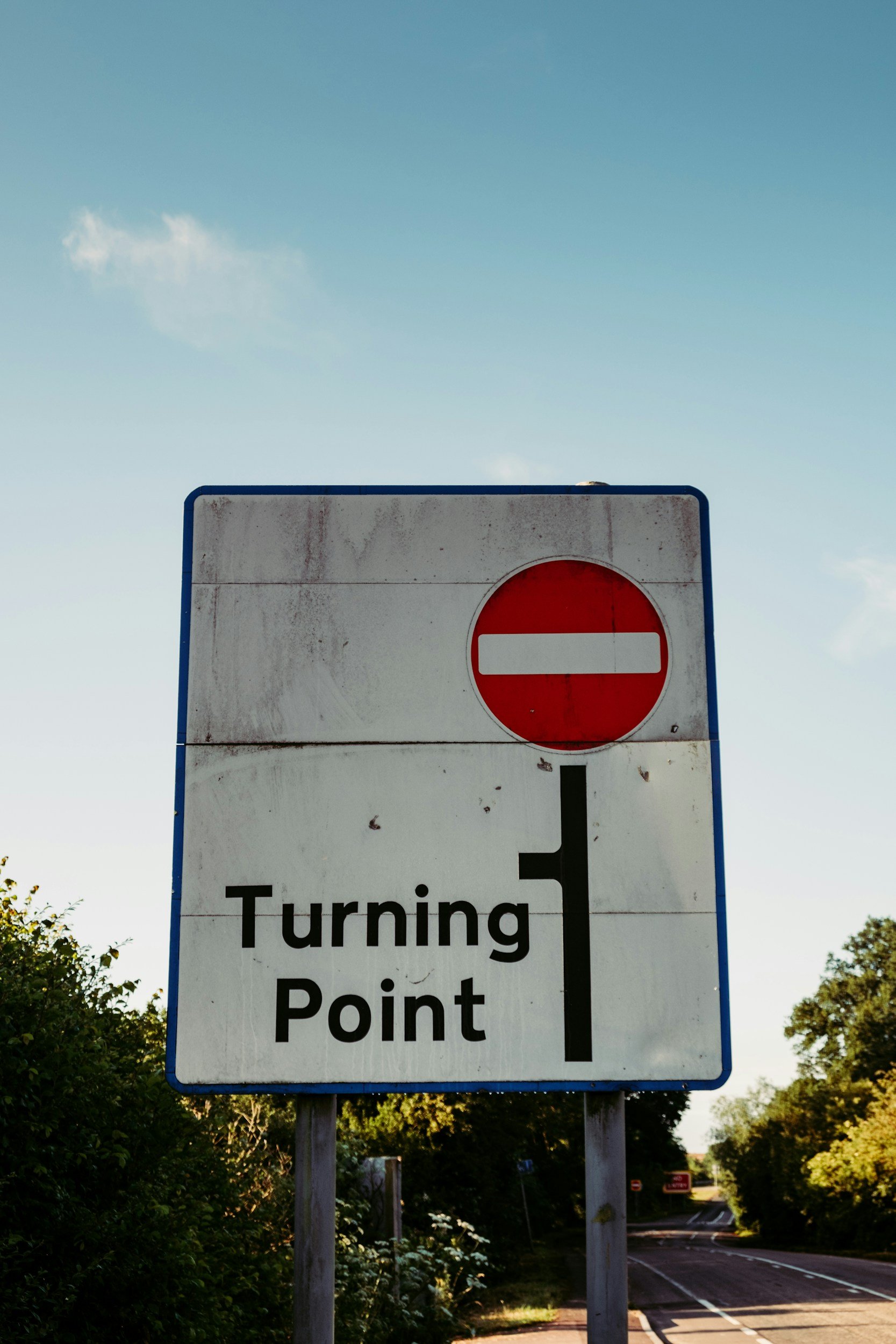
The Point of No Return
A short reflection on the hardest part of painting — knowing when to stop, trusting instinct, and recognising when a work has found its own balance.
The hardest part of painting isn’t starting. It’s stopping.
Particularly with abstraction, there’s no clear signal. No moment when the painting suddenly looks correct.
You stop when the work feels like it doesn’t need you anymore.
That feeling isn’t logical. It’s physical. The surface settles. The tension feels intentional rather than accidental. Adding more paint would feel like interference rather than improvement.
Of course, sometimes I ignore that feeling and add one mark too many. Usually that’s when it all turns south, and the painting is overworked.
But painting isn’t about getting everything right. It’s about paying attention long enough to recognise when the work has found its own balance — and having the discipline to leave it there.
Over time, when to stop becomes more instictive, but sometimes, when you look at it on the wall days later, I can never stop myself think, but what if ……
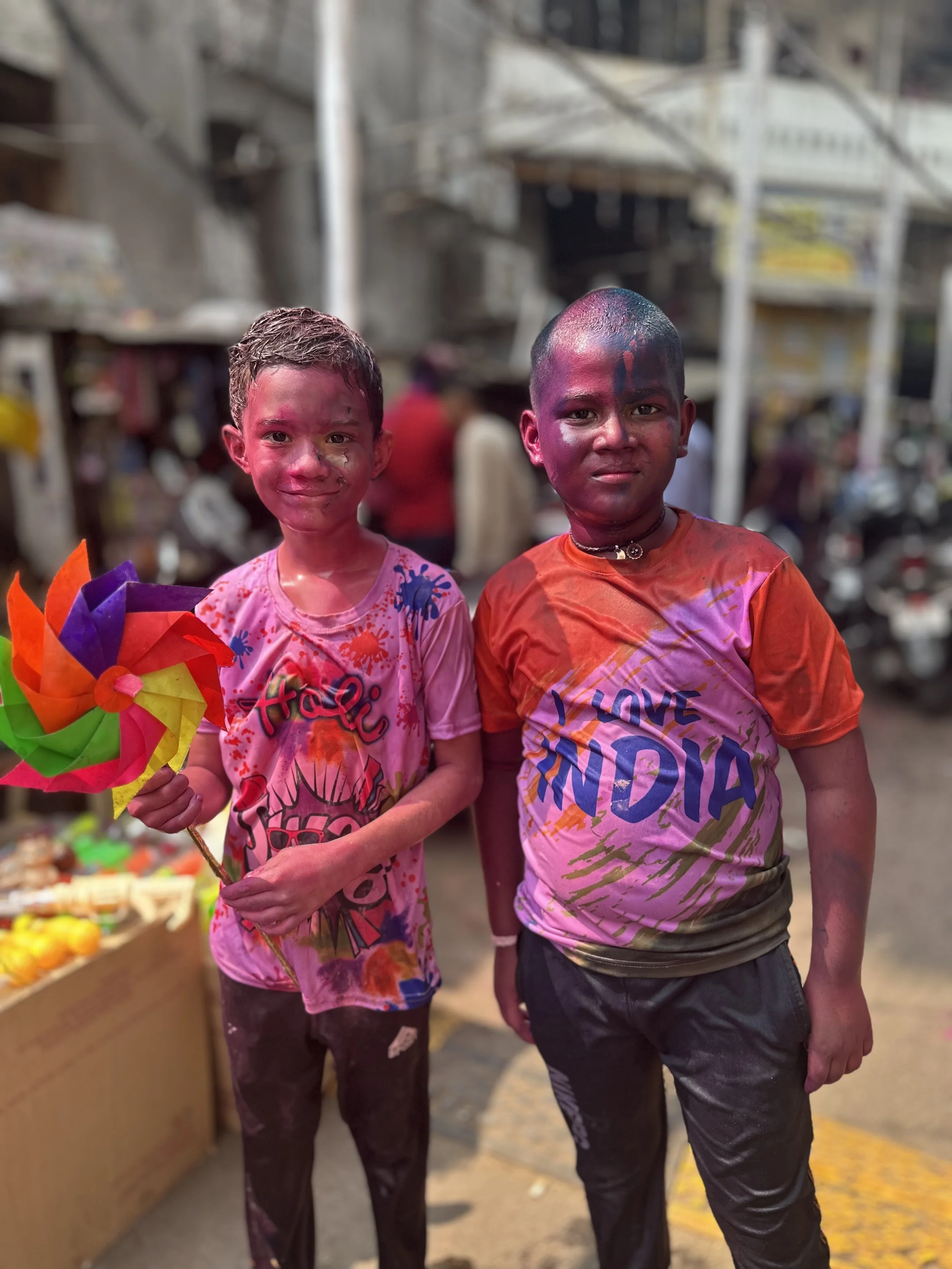
Colour, Chaos, and India
A short essay on how India changed the way I see colour and made it harder to be timid in my painting.
India didn’t give me a style. It gave me permission.
Living in Mumbai meant living inside colour every day. Pink next to orange next to green wasn’t unusual — it was normal. Rust sat beside turquoise. Fluorescent signage glowed over faded paint and nothing felt out of place.
At first it looked chaotic. Then I realised it wasn’t chaos at all — it was confidence.
After a while, that kind of visual intensity changes how you see. You stop worrying about whether colours should work together and start noticing what they actually do when they meet on the surface. You stop asking whether something is too bold and start asking whether it feels alive in the painting.
Mumbai didn’t tell me what to paint. But it made it harder to be timid in the studio.
Living there raised my tolerance for saturation. It made me more comfortable letting colours collide instead of behave. It encouraged risk, even when I wasn’t consciously trying to take it.
India didn’t shape the subjects of my work. It shaped the attitude behind the painting.
Once you’ve lived inside colour used without apology, it’s difficult to go back to using it politely.
And once you stop being polite with colour, the painting starts to have more to say.
The Uncertainty Principle
A reflection on why abstract painting isn’t random, but built through attention, response, and accepting uncertainty.
If someone watched me paint, they might think I had a plan.
I don’t.
I don’t start with a finished image in mind. There’s no destination I’m trying to reach. Usually there’s just a canvas, a colour choice that may or may not work, and a willingness to see what happens next.
It isn’t designed beforehand. It emerges through the process of painting.
There is structure, but it builds in real time. One layer demands another. A section that felt right yesterday suddenly needs disrupting today. The painting develops through response rather than design.
Abstract painting isn’t random. It’s improvised.
Improvisation still requires attention. You’re constantly listening — to balance, to tension, to the way colours behave on the surface.
Mistakes aren’t disasters. They’re information. A muddy section tells you something about weight. An overworked area tells you you stopped paying attention to the painting.
Sometimes I only understand what a painting needs when I step back across the room and see it differently. Up close it feels convincing. From a distance it tells another story.
The uncertainty isn’t something to eliminate.
It’s the reason to start a painting in the first place.
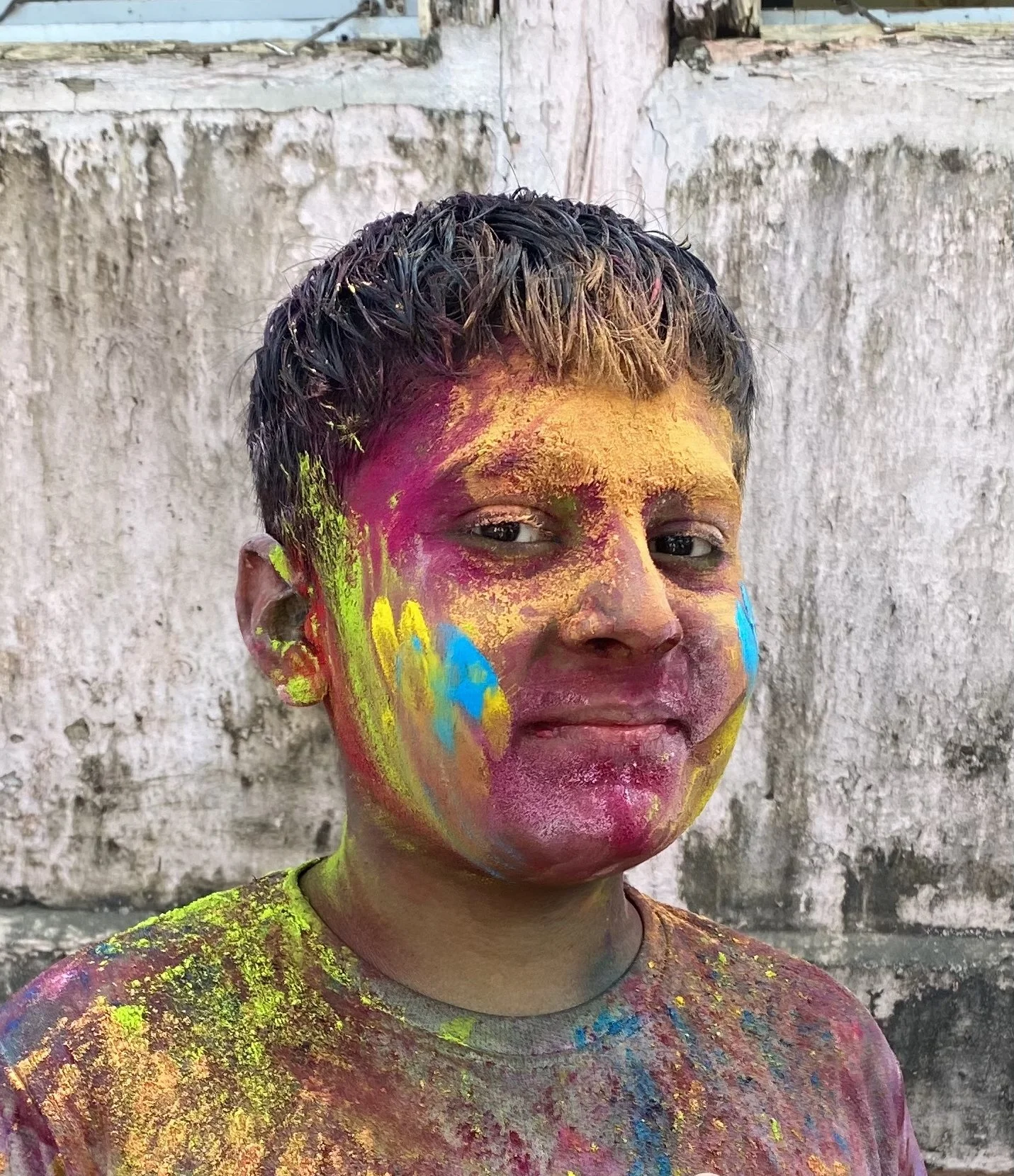
When Colour Takes Control
A practical look at how an abstract painting actually starts, develops, and reaches its final form in the studio.
Freedom sounds romantic until you’re standing in front of a blank canvas with no idea what to do first.
Most of the time I begin with a background — a field of colour that sets the mood and gives the painting somewhere to start. It’s scaffolding, not decoration. It gives the surface weight and direction.
But sometimes there’s no base. Just the first stroke landing on white. Those are harder. One decision sets everything in motion.
Because the first mark creates gravity. It demands a response.
I don’t think about colour symbolically. Colour is energy. Temperature. Weight. A bright yellow can throw everything off. A dark blue can hold the whole painting together.
Once the painting is moving, the job isn’t to add more — it’s to respond with the next colour. Sometimes that means painting over something you liked. If it weakens the whole piece, it has to go.
For reasons I don’t fully analyse, many of my paintings finish with a splash of metallic paint. It’s not decoration. It’s punctuation. A shift in light. A small refusal to be entirely matte.
Metallic paint behaves differently. It catches light unpredictably. It changes as you move across the surface. It introduces another variable at the last moment.
Maybe that’s the point.
Even at the end, I don’t want the painting to feel completely fixed. I want it to feel alive — responsive to the viewer, to the room, to the time of day.
Because even though I never know where a painting will end up, I do know this: once it starts, it begins to set its own direction. My job is to respond with colour carefully enough not to force it somewhere it doesn’t want to go.
And to stop before I ruin it.
The Zone
A short piece about the moment painting stops feeling like work and becomes something closer to music, rhythm, and presence.
There’s a moment when painting stops feeling like an activity and starts to feel more like playing sport or listening to music.
You’re suddenly inside it.
Time shifts. One mark leads to the next before you’ve fully explained why. You’re not thinking about the outcome — you’re responding to what’s happening on the surface.
That state is one of the main reasons I paint.
It feels less like making something and more like stepping into something. A bit like meditation, except louder and messier. The outside world drops away and what matters is the rhythm between you, the paint, and the surface.
In that space, you’re not trying to prove anything. You’re not chasing a finished image. You’re just present with the work.
And strangely, that’s when the good paintings begin to emerge.
Because the point isn’t to force a final picture.
The point is to enter the zone, discover something in the process, and try to find that state again tomorrow in the studio.
Something More Important Than Colour
A personal reflection on how moving to Mumbai gave me the freedom to experiment, take risks, and begin painting abstract work seriously.
My abstract painting began when I moved to India.
It wasn’t the saris, the signage, or the colour of the festivals that changed things.
What Mumbai gave me was something less romantic but far more useful.
It gave me space.
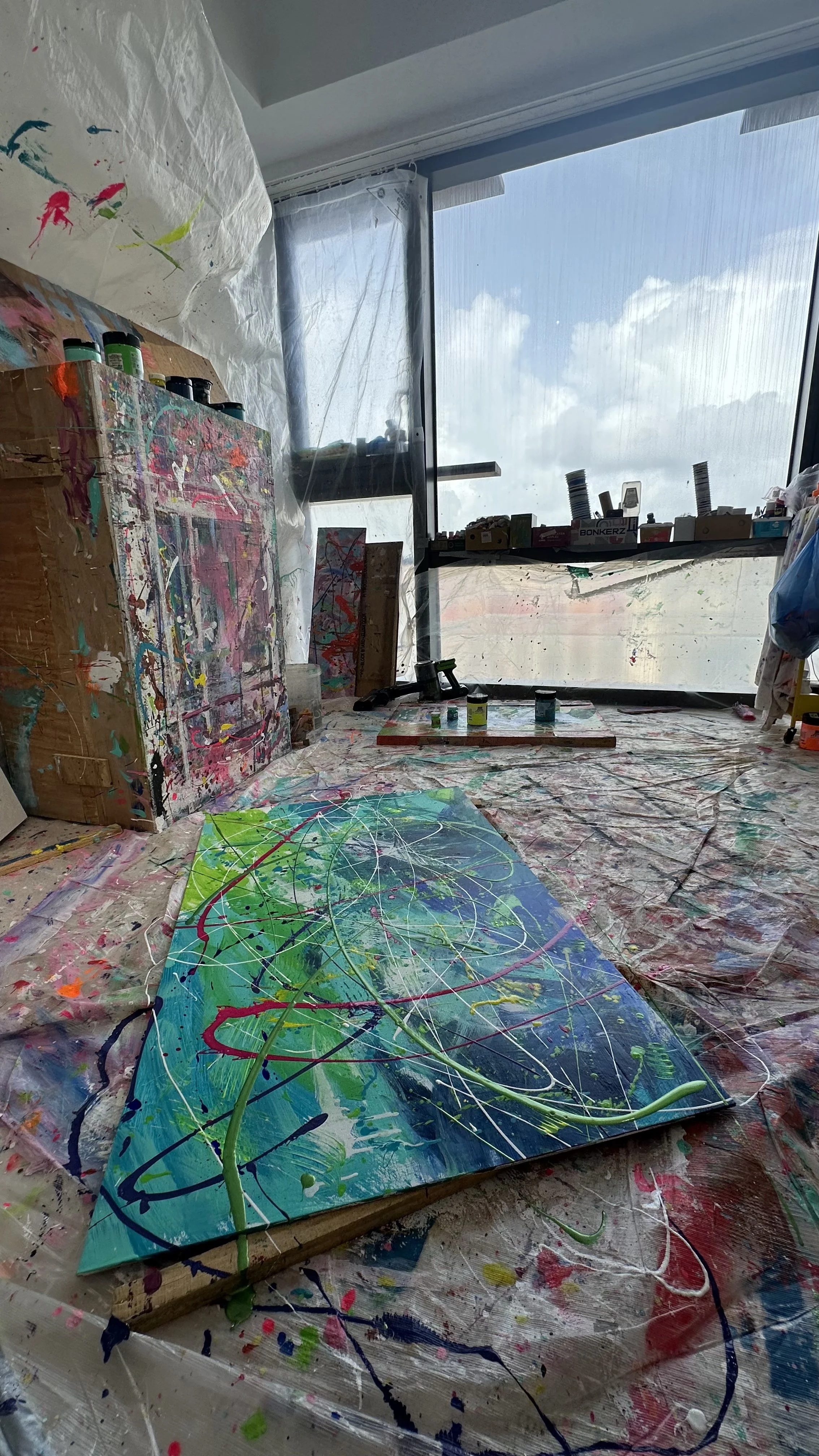
For the first time I had a studio where I could throw paint without worrying about the walls, the floor, or the consequences. I didn’t need to be careful, and a mistake didn’t feel expensive.
That changed everything.
Because when consequence disappears, fear disappears with it. And when fear drops away, paint behaves differently.
I could throw colour down, scrape it back, repaint it, ruin it, and rescue it again — without feeling I had to justify the mess.
For me, that freedom matters more than inspiration.
Because once you stop protecting the wall (and ceiling), you stop protecting the painting.
And that’s usually the moment when something real starts to happen in the work.